
Sample Shipment Monitoring
Shipment Monitoring
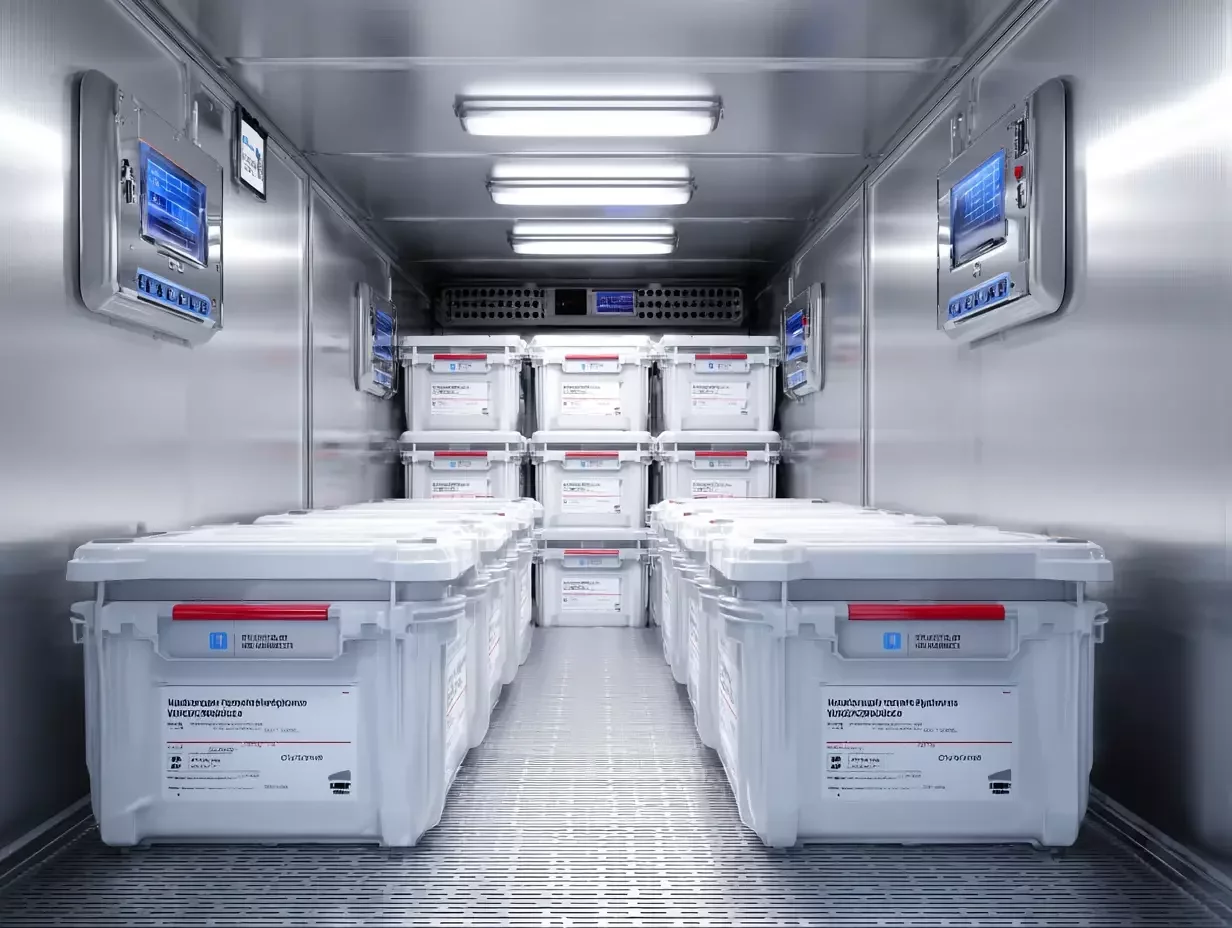
Lab-to-lab and facility-to-facility sample transport monitoring. Sensors placed inside shipping containers provide proof of cold chain integrity with continuous temperature logging, shipment history, and excursion reporting from pickup to delivery.
Cold Chain Proof for Lab Samples
Diagnostic specimens, research samples, and reference materials lose analytical validity if temperature is breached during transport between facilities, yet most lab-to-lab shipments rely on passive coolant and a paper log that gives no information about what happened inside the box. This offering provides continuous, logged proof that cold chain integrity was maintained from the moment of pickup through receipt at the destination laboratory.
How it's deployed
Small, self-contained data loggers are placed inside the sample shipping container alongside the specimens at the sending laboratory, recording temperature at short intervals for the full transit duration without requiring any network connectivity during the journey. At delivery, the logger is read out — wirelessly or via USB — and the complete time-temperature record is uploaded automatically to the platform.
Evidence & Reporting
Each closed shipment produces a tamper-evident PDF report containing a continuous temperature graph, tabulated excursion events with duration and peak deviation, and the logger serial number and calibration reference for traceability. The report is suitable as evidence of cold chain integrity in ISO 17025-accredited laboratory workflows and satisfies chain-of-custody documentation requirements for regulated sample types.
Included and Optional Capabilities
Included
- Real-time Temperature Sensors
TS sensors for continuous monitoring
- Full Shipment Excursion Reports
Complete excursion documentation
Optional add-ons
- Auto Departure/Arrival Detection
Automatic shipment event detection
- ERP/LIMS Integration
System integration
Related Shipment Monitoring Offerings
Frequently Asked Questions
If the logger supports wireless readout, any smartphone or tablet running the Seemoto mobile app can complete the download at the receiving end without any installed infrastructure. For USB loggers, the receiving lab simply plugs the device into any computer with the lightweight readout utility installed, and the record uploads automatically.
Yes — sample IDs, requisition numbers, or batch references can be entered at the time the shipment is created and are embedded in both the shipment record and the generated PDF report. When the shipment is closed, the platform can push the completion event and a link to the temperature report to an external LIMS via webhook or API call.
Return legs are logged as separate shipment records so that the outbound and inbound temperature histories are kept distinct and independently reportable. A new logger can be placed in the container at the receiving facility for the return journey, or a reusable logger can be reconditioned and re-deployed if the turnaround is handled within the facility.
Plan Sample Shipment Monitoring
Talk with Seemoto about the sensor, gateway, reporting, and compliance setup for sample shipment monitoring.